
Our Services
Home ECG
At a Glance
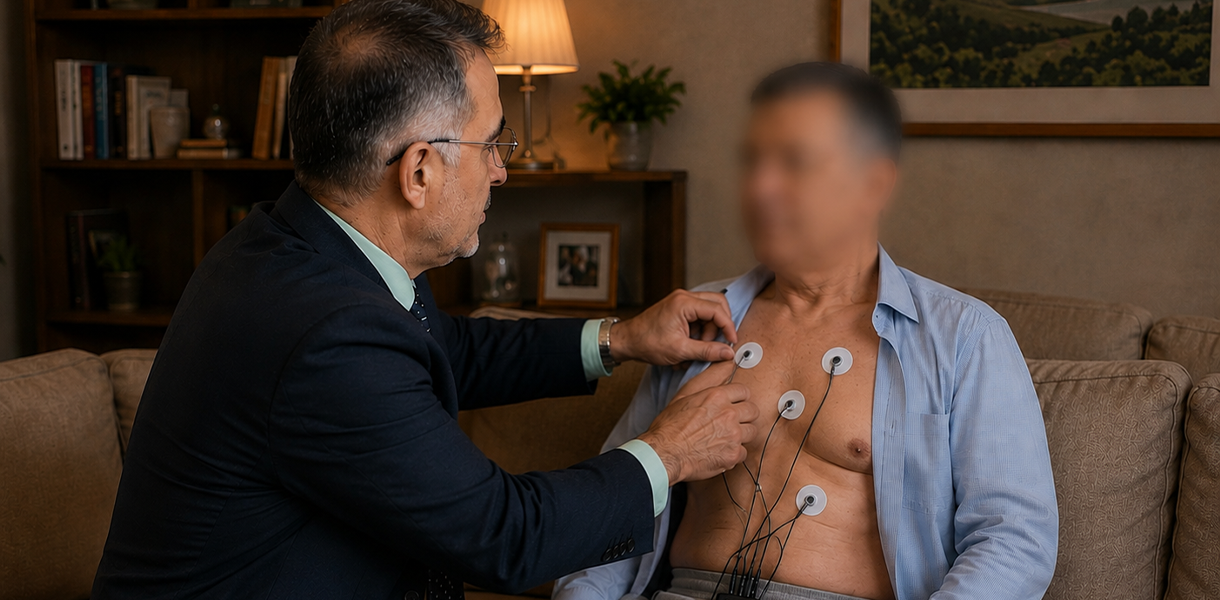
Home ECG: Home ECG, or electrocardiography, is an examination method that allows the electrical activity of the heart to be evaluated a home setting with the help of portable devices. Book a cardiology appointment Kozyatağı. Assessment is individualized around symptoms, risk factors, and appropriate testing.
Home ECG — What Is It?
What is Home ECG? Home ECG, or electrocardiography, is an examination method that allows the electrical activity of the heart to be evaluated a home setting with the help of portable devices. Book a cardiology appointment Kozyatağı. The goal is a clear, indication-driven plan—avoiding unnecessary testing while giving patients an understandable next step.
Dr. Sinan Coşkun Turan reviews symptoms, medical history, ECG/echocardiography findings, and advanced imaging when needed as part of Home ECG. Appointments can be arranged for patients in Kadıköy, Kozyatağı, Ataşehir, and nearby districts, including international patients seeking English-speaking cardiology care in Istanbul.
After evaluation, patients leave with a plain-language explanation of findings, priority lifestyle and follow-up steps, and—if required—options for further testing or treatment. Questions remain welcome throughout the pathway so decisions stay shared and informed.
In-Depth Information
What Is Home ECG?Home ECG, or electrocardiography, is an examination method that allows the electrical activity of the heart to be evaluated in a home setting with the help of portable devices.
ECG helps evaluate:
- Heart rhythm
- Pulse rate
- Conduction disorders
- Some rhythm problems
Thanks to advances in portable device technologies, ECG examination can be performed at home in suitable patients.
Who Can Benefit from Home ECG Service?
Home ECG may be especially useful for:
- Elderly patients
- Bedridden individuals
- People with limited mobility
- Patients who have had a stroke
- People with heart failure
- Patients with complaints of palpitations
- Individuals who have difficulty going to the hospital
For Which Complaints May Home ECG Be Needed?
Home ECG may be useful in the following situations:
- Palpitations
- Chest pain
- Shortness of breath
- Dizziness
- Feeling faint
- Irregular heartbeats
- Hypertension
- Heart failure follow-up
However, ECG may not be necessary for every patient. The need is determined after cardiology evaluation.
What Problems Can Be Detected with Home ECG?
With ECG, the following can be evaluated:
- Atrial fibrillation
- Extrasystoles
- Tachycardias
- Bradycardias
- Conduction disorders
- Some findings of a previous heart attack
However, ECG alone does not rule out all heart diseases. When necessary, echocardiography, Holter monitoring, or advanced imaging methods may be planned.
Is an ECG Performed at Home the Same as an ECG Performed in the Hospital?
Yes.
When standard 12-lead ECG devices are used, the recording principle is the same.
Thanks to portable devices, recordings obtained in the home setting can provide clinically reliable information.
Can Home ECG Show a Heart Attack?
Some findings of an acute or previous heart attack may be seen on ECG.
However, a normal ECG does not completely rule out a heart attack or coronary artery disease.
In cases of chest pain, cold sweating, or severe shortness of breath, urgent hospital evaluation is required.
Does Home ECG Replace the Emergency Department?
No.
Home ECG is performed for:
- Planned evaluation
- Follow-up
- Monitoring of chronic diseases
Emergency medical evaluation is required in the following situations:
- Severe chest pain
- Suspected heart attack
- Severe shortness of breath
- Loss of consciousness
- Fainting
Can Other Tests Be Performed Together with Home ECG?
When necessary, the following can also be planned in the home setting:
- Cardiology consultation
- Echocardiography (ECHO)
- Rhythm Holter
- Blood Pressure Holter
The aim is to perform the necessary examination for the appropriate patient.
Who Is It For?
- People with chest discomfort, palpitations, breathlessness, or blood-pressure concerns
- Those with a family history of early heart disease or multiple cardiovascular risk factors
- Patients seeking a check-up, second opinion, or preventive cardiology review
- Older adults or mobility-limited patients who need home monitoring
- Patients covered by private health insurance planning a cardiology assessment
- Anyone needing pre-operative or pre-procedural cardiac risk evaluation
Evaluation Process
-
Step 1
Initial consultation and review of symptoms and risk history
-
Step 2
Clinical examination and planning of essential tests
-
Step 3
Integrated interpretation of findings with clear patient education
-
Step 4
Shared decision on follow-up, treatment, or further investigation
-
Step 5
Control visit and longer-term monitoring plan when needed



Frequently Asked Questions
Can ECG be performed at home?
Yes. ECG recording can be performed at home using portable devices.
Is an ECG performed at home reliable?
Yes. When appropriate devices and correct recording techniques are used, an ECG performed at home can provide clinically reliable information. The result should be evaluated by a physician together with the patient’s complaints and clinical findings.
Is Home ECG painful?
No. ECG is a painless and non-invasive examination. It does not involve needles, radiation, or any surgical procedure.
Can a rhythm disorder be detected with Home ECG?
Yes. Some rhythm disorders such as atrial fibrillation, extrasystoles, tachycardia, bradycardia, and conduction disorders may be detected with ECG. However, intermittent rhythm problems may require Holter monitoring for longer recording.
Does Home ECG replace emergency situations?
No. Home ECG does not replace emergency medical care. In cases of severe chest pain, suspected heart attack, severe shortness of breath, loss of consciousness, or fainting, emergency hospital evaluation is required.


