
Our Services
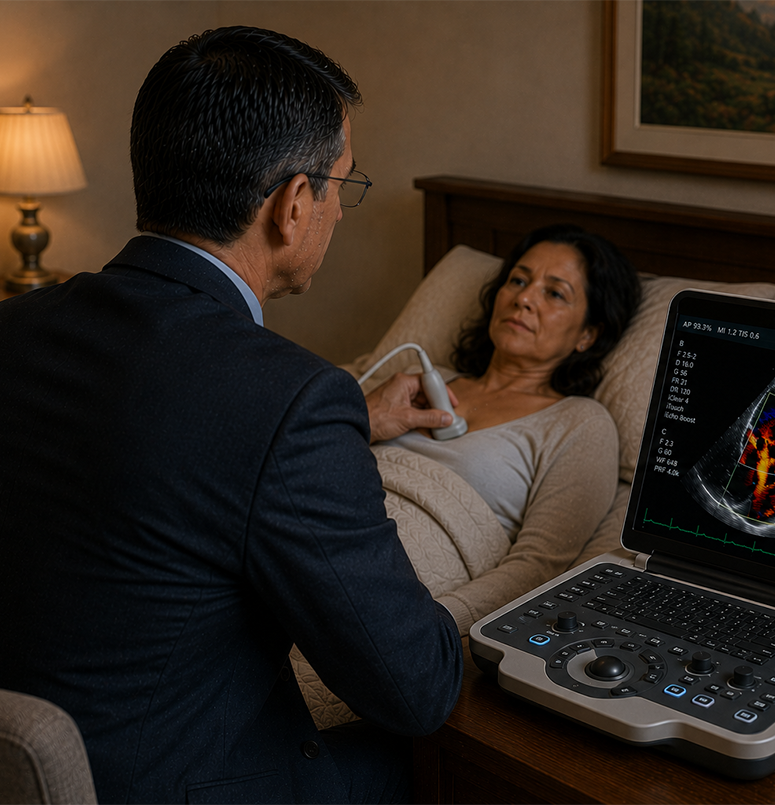
Home Echocardiography in Istanbul
At a Glance
Home Echocardiography Istanbul: Home echocardiography allows cardiac ultrasound examinations to be performed the patient's own environment using portable echocardiography equipment. Book a cardiology appointment Kozyatağı. Assessment is individualized around symptoms, risk factors, and appropriate testing.
Home Echocardiography in Istanbul — What Is It?
What is Home Echocardiography in Istanbul? Home echocardiography allows cardiac ultrasound examinations to be performed the patient's own environment using portable echocardiography equipment. Book a cardiology appointment Kozyatağı. The goal is a clear, indication-driven plan—avoiding unnecessary testing while giving patients an understandable next step.
Dr. Sinan Coşkun Turan reviews symptoms, medical history, ECG/echocardiography findings, and advanced imaging when needed as part of Home Echocardiography in Istanbul. Appointments can be arranged for patients in Kadıköy, Kozyatağı, Ataşehir, and nearby districts, including international patients seeking English-speaking cardiology care in Istanbul.
After evaluation, patients leave with a plain-language explanation of findings, priority lifestyle and follow-up steps, and—if required—options for further testing or treatment. Questions remain welcome throughout the pathway so decisions stay shared and informed.
In-Depth Information
Home Echocardiography Home Echocardiography in IstanbulHome echocardiography allows cardiac ultrasound examinations to be performed in the patient's own environment using portable echocardiography equipment.
This service may be particularly helpful for:
- Elderly individuals
- Homebound patients
- Patients with limited mobility
- Stroke survivors
- Patients with neurological disorders
- Individuals recovering from surgery
- International residents requiring home medical care
The goal is to provide clinically meaningful cardiac evaluation without unnecessary travel whenever appropriate.
What Is Echocardiography?
Echocardiography is an ultrasound examination of the heart and one of the most important tools in modern cardiology.
It provides valuable information regarding:
- Cardiac pumping function
- Heart chambers
- Heart valves
- Structural abnormalities
- Heart failure
- Pericardial disease
Echocardiography is painless and does not involve radiation exposure.
Who May Benefit from Home Echocardiography?
Home echocardiography may be useful for:
Elderly Patients
Advanced age often makes transportation difficult, especially in individuals with multiple medical conditions.
Homebound Patients
Patients confined to bed or with severe mobility limitations may benefit from bedside cardiac assessment.
Heart Failure Patients
Regular evaluation of cardiac function may be necessary during follow-up.
Valve Disease Patients
Monitoring of valve abnormalities sometimes requires periodic echocardiographic examinations.
Neurological Disorders
Patients with Parkinson's disease, dementia or stroke-related disabilities may benefit from home evaluation.
Suitability is always assessed individually.
What Can Home Echocardiography Evaluate?
Portable echocardiography may help assess:
Cardiac Function
Evaluation of ventricular performance and global heart function.
Heart Failure
Assessment of cardiac pumping ability and structural abnormalities.
Heart Valve Disease
Detection and follow-up of:
- Aortic stenosis
- Mitral regurgitation
- Mitral valve prolapse
- Other valvular abnormalities
Chamber Dimensions
Evaluation of atrial and ventricular size.
Pericardial Conditions
Identification of certain fluid accumulations around the heart.
Is Home Echocardiography Reliable?
When performed by an experienced cardiologist using appropriate equipment, home echocardiography can provide valuable diagnostic information.
Clinical findings, medical history and physical examination remain essential components of cardiovascular assessment.
Can Home Echocardiography Detect Coronary Artery Disease?
Not directly.
Echocardiography evaluates cardiac structure and function but does not visualize coronary arteries in detail.
When coronary artery disease is suspected, additional investigations such as coronary CT angiography or invasive coronary angiography may be considered when clinically indicated.
Does Every Patient Need Echocardiography?
No.
Echocardiography is an extremely valuable investigation, but it should not be performed routinely in every patient.
The decision is based on:
- Symptoms
- Medical history
- Physical examination
- Expected clinical benefit
The aim is to avoid unnecessary testing while ensuring accurate diagnosis.
Home Echocardiography and Heart Failure
Heart failure patients often experience:
- Shortness of breath
- Fatigue
- Reduced exercise tolerance
- Leg swelling
Portable echocardiography may help evaluate:
- Cardiac pumping function
- Structural abnormalities
- Valve disease
- Changes requiring further attention
Follow-up strategies are individualized according to each patient's condition.
Home Echocardiography and Valve Disease
Patients with known valve disorders may require periodic monitoring.
Conditions commonly evaluated include:
- Aortic stenosis
- Mitral regurgitation
- Mitral valve prolapse
- Tricuspid valve disease
Treatment decisions are based on symptoms, severity and expected clinical benefit.
Does Home Echocardiography Replace Hospital Evaluation?
No.
Home echocardiography is intended to complement clinical assessment.
Advanced imaging, emergency situations and invasive procedures require hospital facilities.
Patients with:
- Acute chest pain
- Suspected myocardial infarction
- Severe respiratory distress
should always be evaluated urgently in appropriate medical centers.
International Patients
Home echocardiography services are available for:
- Expatriates living in Istanbul
- International residents
- Elderly visitors
- Homebound foreign patients
- Individuals seeking English-speaking medical support
Clear communication and individualized care are essential parts of the evaluation process.
Who Is It For?
- People with chest discomfort, palpitations, breathlessness, or blood-pressure concerns
- Those with a family history of early heart disease or multiple cardiovascular risk factors
- Patients seeking a check-up, second opinion, or preventive cardiology review
- Older adults or mobility-limited patients who need home monitoring
- Patients covered by private health insurance planning a cardiology assessment
- Anyone needing pre-operative or pre-procedural cardiac risk evaluation
Evaluation Process
-
Step 1
Initial consultation and review of symptoms and risk history
-
Step 2
Clinical examination and planning of essential tests
-
Step 3
Integrated interpretation of findings with clear patient education
-
Step 4
Shared decision on follow-up, treatment, or further investigation
-
Step 5
Control visit and longer-term monitoring plan when needed
Frequently Asked Questions
Can echocardiography be performed at home?
Yes. Portable echocardiography systems allow cardiac ultrasound examinations to be performed during home visits.
Is home echocardiography painful?
No. Echocardiography is completely non-invasive and painless.
Can home echocardiography diagnose blocked arteries?
Not directly. Additional investigations may be necessary if coronary artery disease is suspected.
Do all heart failure patients need echocardiography?
Not necessarily. The decision depends on the clinical situation and expected benefit.
Can home echocardiography replace hospital evaluation?
No. Certain conditions and procedures require hospital-based assessment.


